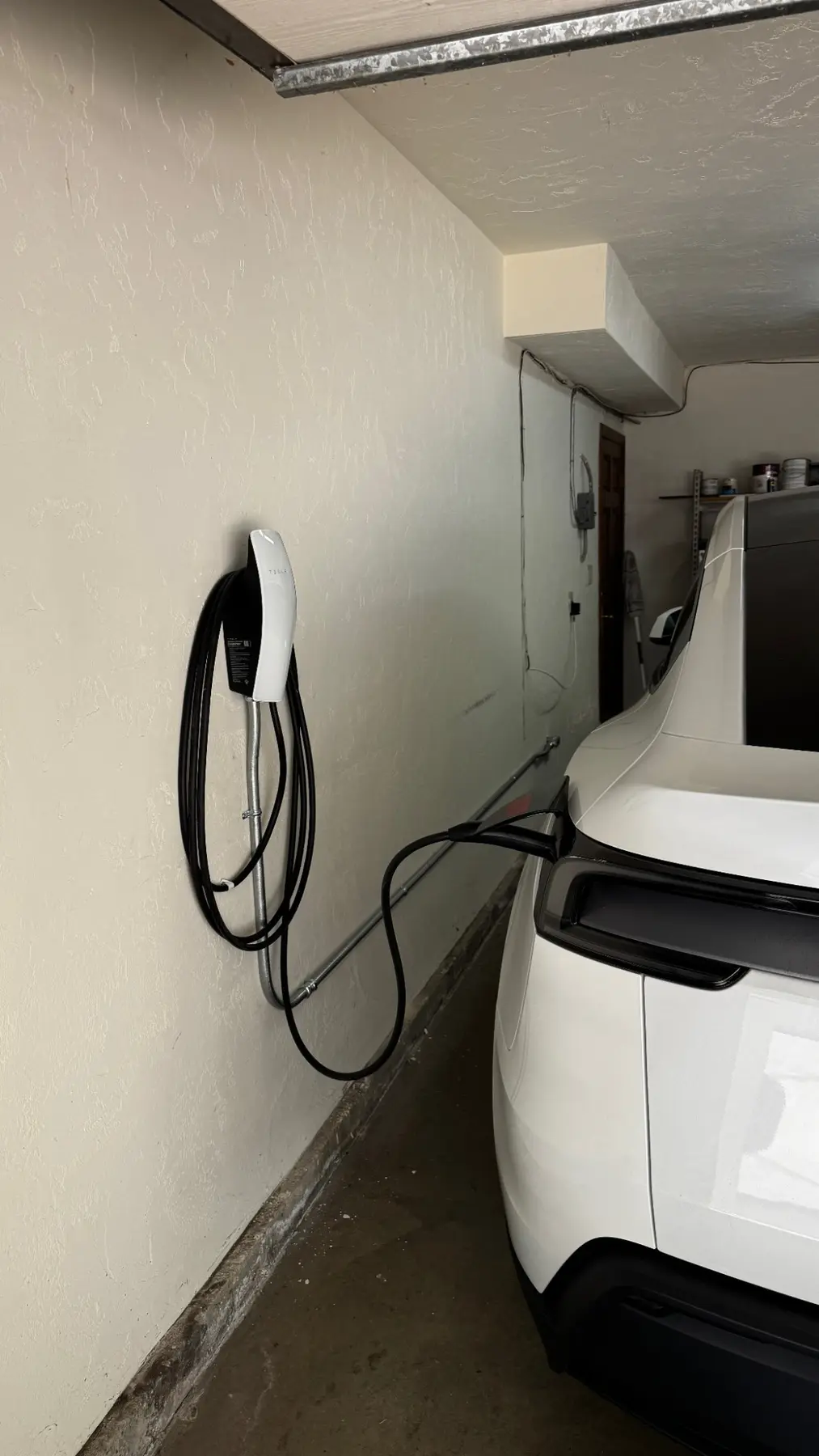
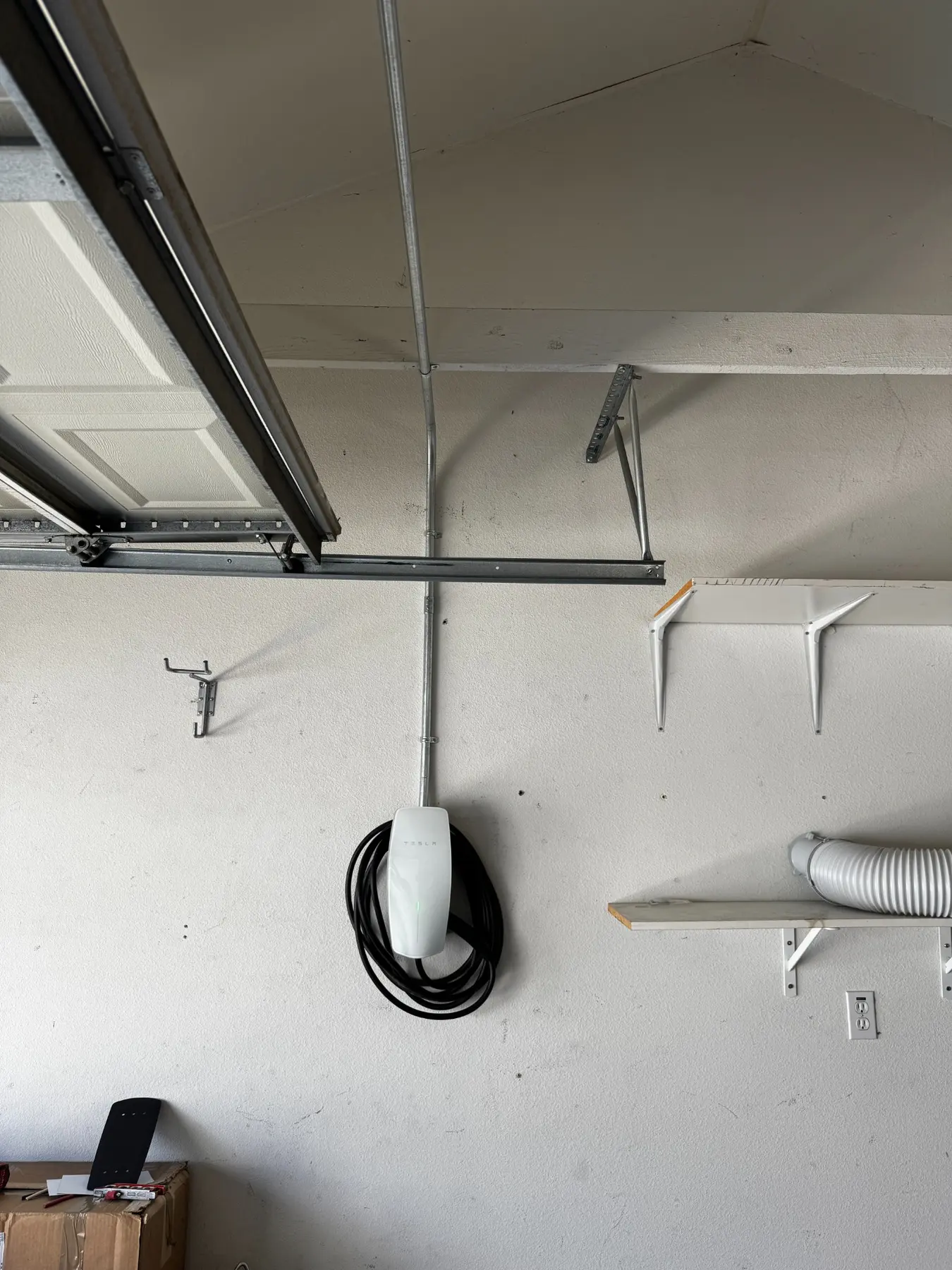
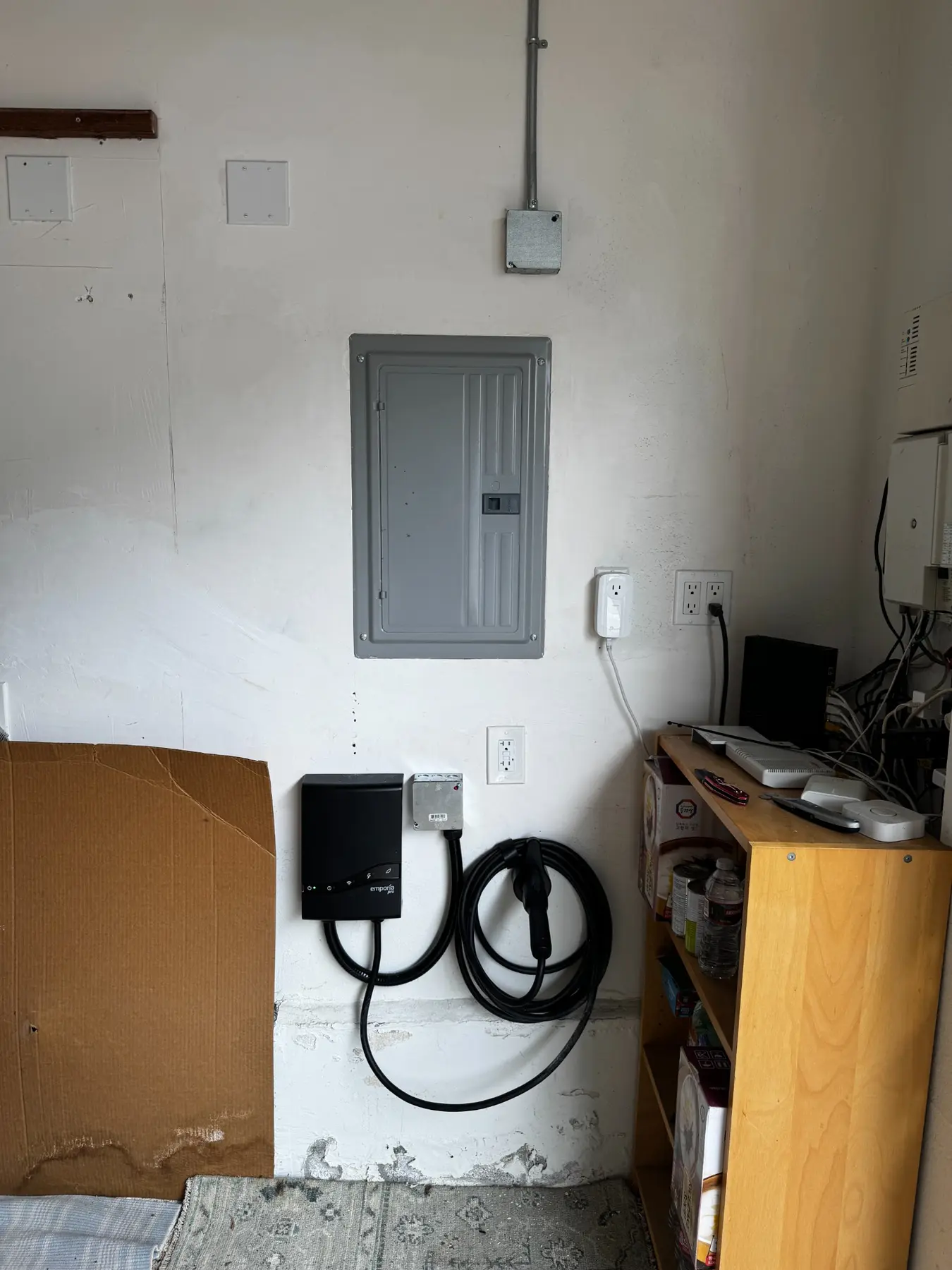
Many South Bay homes can support Level 2 charging without a complete service upgrade, but the answer depends on the charger, existing loads and available capacity—not simply the panel's breaker rating.
The vehicle, charger model and configured output determine the circuit requirements. A lower configured charging rate may meet a driver's daily needs while reducing the demand placed on an existing electrical service.
Available breaker space is not the same as available capacity
An open breaker position does not prove that the service can support the added load. Existing heating, cooling, cooking, water heating, laundry and other equipment must be considered through the applicable load-calculation method.
There may be more than one compliant solution
Depending on the property, the options may include a dedicated hardwired circuit, a lower charger setting, approved load-management equipment or a service upgrade. The wiring route, charger location and permitting requirements also affect the final scope.
EV charger planning
Related EV charging resources.
Compare connection options, electrical capacity and installation planning before choosing the right path for the property.
More from this project
What to expect
A straightforward process from first call to completed work.
01
Discuss the project
We start with the property, the work you need and any plans, equipment information or electrical symptoms that help define the request.
02
Confirm the scope
Walteria Electric evaluates the relevant site conditions and explains the recommended work, applicable coordination and what is included.
03
Complete it correctly
The installation is performed with attention to safety, code requirements and a clean finished result, followed by testing and applicable inspection.
Frequently asked questions
Helpful answers before you start.
Do all EV chargers require a 60-amp circuit?
No. Charger circuit requirements vary, and many units can be configured for different output levels based on the installation and available capacity.
Is a hardwired charger better than a NEMA 14-50 receptacle?
Hardwired charging is often a clean dedicated solution and can avoid some receptacle-related requirements. The best choice depends on the equipment, desired output and use of the space.
Can load management avoid a panel upgrade?
In some installations, approved load-management equipment may provide a compliant alternative. The existing service and equipment must be evaluated first.