Hardwired EV charger or NEMA 14-50? How to choose.
Both can support home Level 2 charging, but they create different equipment, connection, charging-output and future-use decisions. Here is what South Bay homeowners should compare before installing the circuit.
Start with the charging equipment—not only the outlet type
Some home chargers are designed for a hardwired connection, while others are supplied with a plug or offered in more than one configuration. The charger's installation instructions, configured output and connection method determine the circuit that should be planned.
Hardwired charging creates a permanent dedicated setup
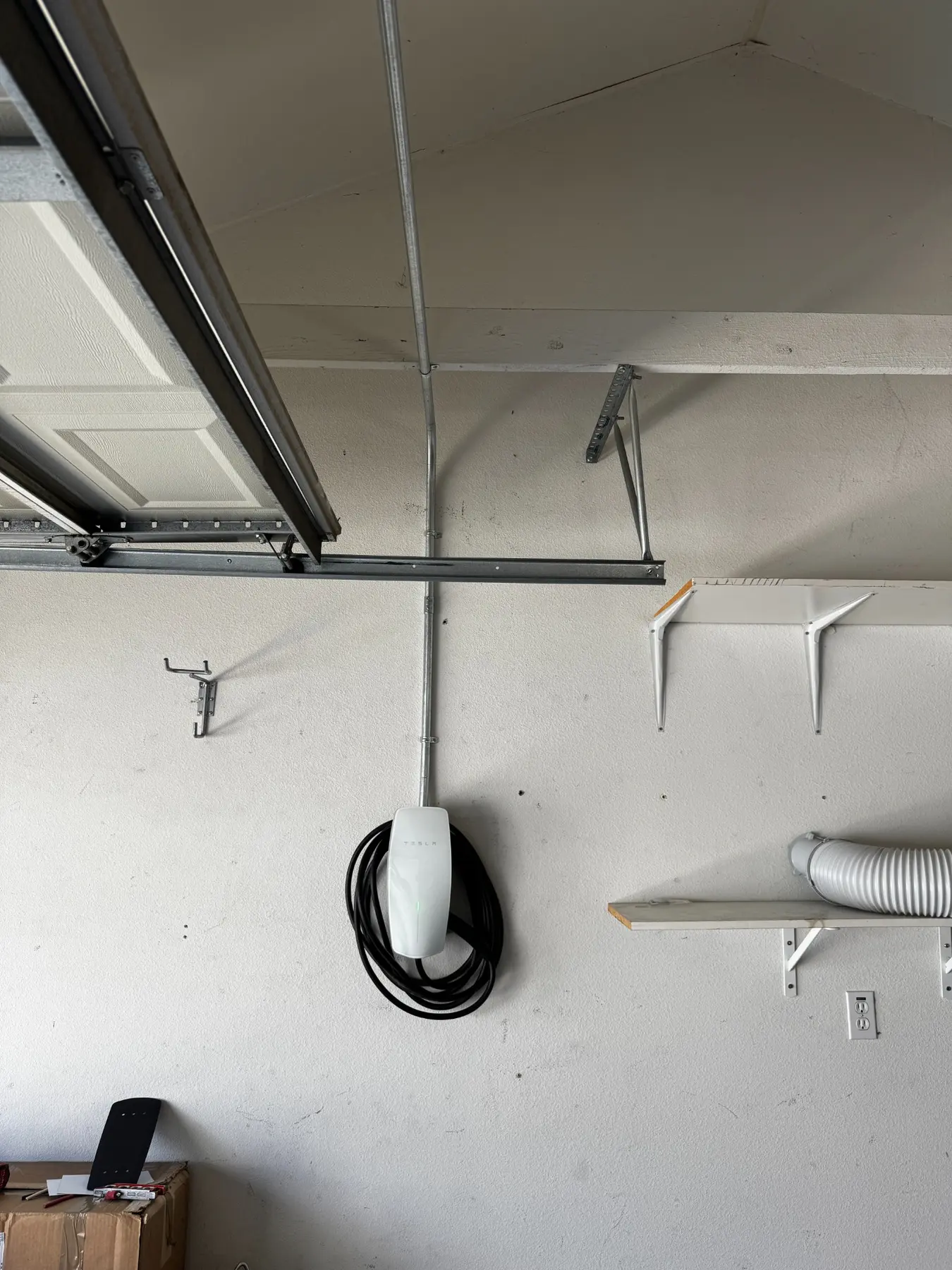
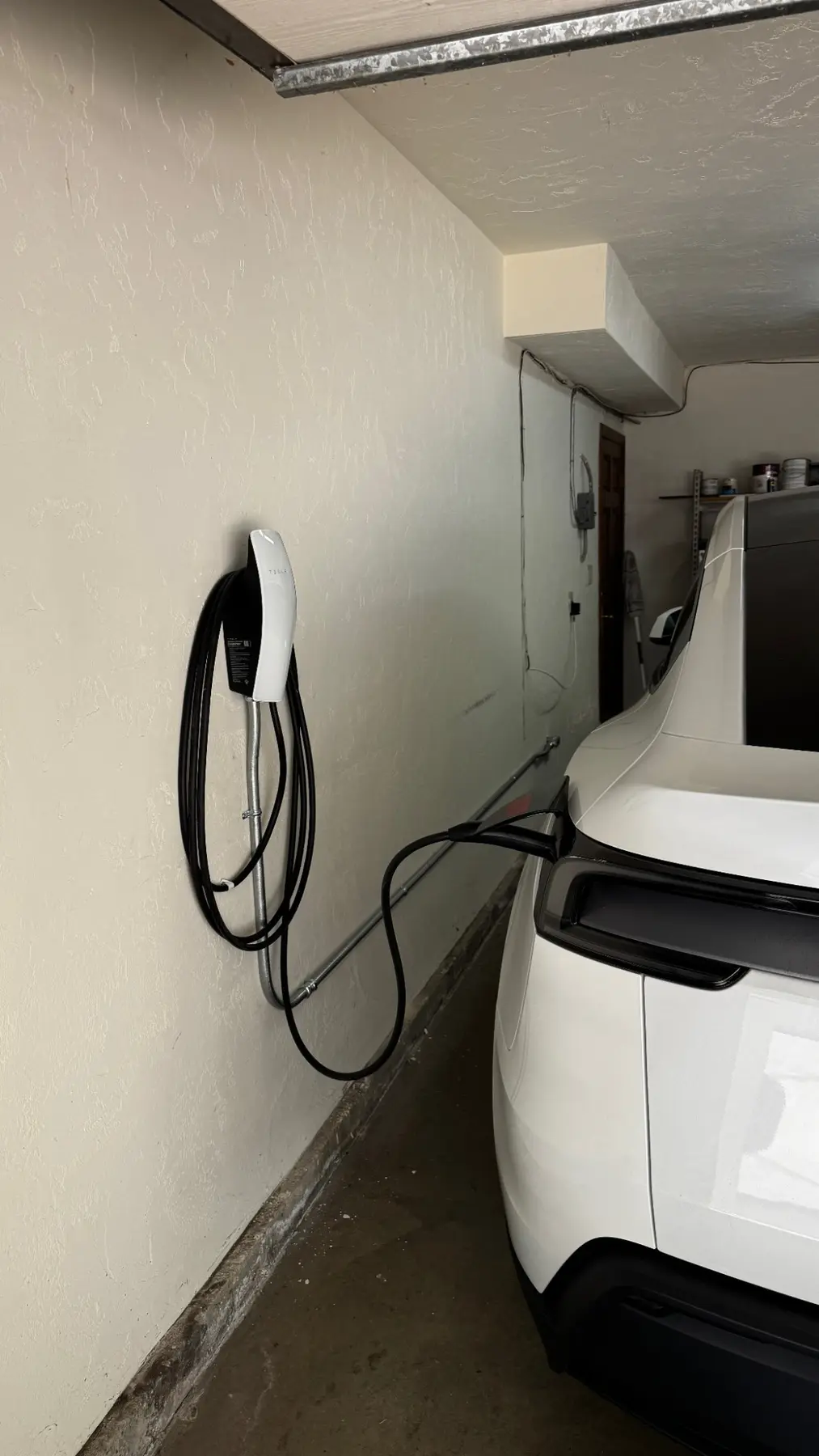
A hardwired charger connects directly to its branch circuit without a receptacle and cord-and-plug connection between the circuit and the equipment. It is often a clean choice for a charger that will remain in one location, especially when the equipment and installation are selected for that environment.
A NEMA 14-50 circuit can provide equipment flexibility
A compatible plug-in charger can be disconnected or replaced without rewiring the branch circuit. The receptacle, enclosure, conductors, breaker, charger cord and installation location still need to match the equipment and intended continuous charging use.
Panel capacity and daily driving still shape the decision
Connection type is only one part of the project. The vehicle, charger, desired charging rate, existing electrical loads, available service capacity and wiring route should be reviewed together. A lower configured output may still recover the energy used in a typical day without planning around the charger's maximum setting.
Related project
See a completed South Bay EV charger installation
View a real Walteria Electric home-charging project planned around panel capacity, charger requirements and a clean wiring route.
A straightforward process from first call to completed work.
01
Discuss the project
We start with the property, the work you need and any plans, equipment information or electrical symptoms that help define the request.
02
Confirm the scope
Walteria Electric evaluates the relevant site conditions and explains the recommended work, applicable coordination and what is included.
03
Complete it correctly
The installation is performed with attention to safety, code requirements and a clean finished result, followed by testing and applicable inspection.
Frequently asked questions
Helpful answers before you start.
Can I use an existing NEMA 14-50 receptacle for EV charging?
It should be evaluated first. The circuit conductors, breaker, receptacle, enclosure, grounding and installation condition all need to be appropriate for the charger and its configured output.
Is a hardwired charger always faster?
No. Charging speed depends on the vehicle, charger, configured output and branch circuit. Some chargers support higher output only when hardwired, but the correct setting still depends on the electrical system.
Which option is easier to replace later?
A compatible plug-in charger is generally simpler to disconnect. Replacing hardwired equipment requires the electrical connection to be safely disconnected and reconnected.
Does choosing a NEMA 14-50 eliminate permit requirements?
Not necessarily. Requirements depend on the new circuit, equipment, property and local authority. Walteria Electric coordinates applicable permitting and inspection when they are part of the project scope.